

I have ADHD, and it turns out it’s one of the biggest reasons this mission works.
For a long time, I didn’t really know what to do with that. Like a lot of people, I saw it as something to manage rather than something that could actually work in my favor. Staying focused could be a challenge, my mind would move fast, and I’d find myself jumping from one idea to the next. There were plenty of moments where that felt like a disadvantage. Over time, especially through building The December 5th Fund, I’ve started to see it differently. In a lot of ways, the way my brain works is exactly what this mission needs.
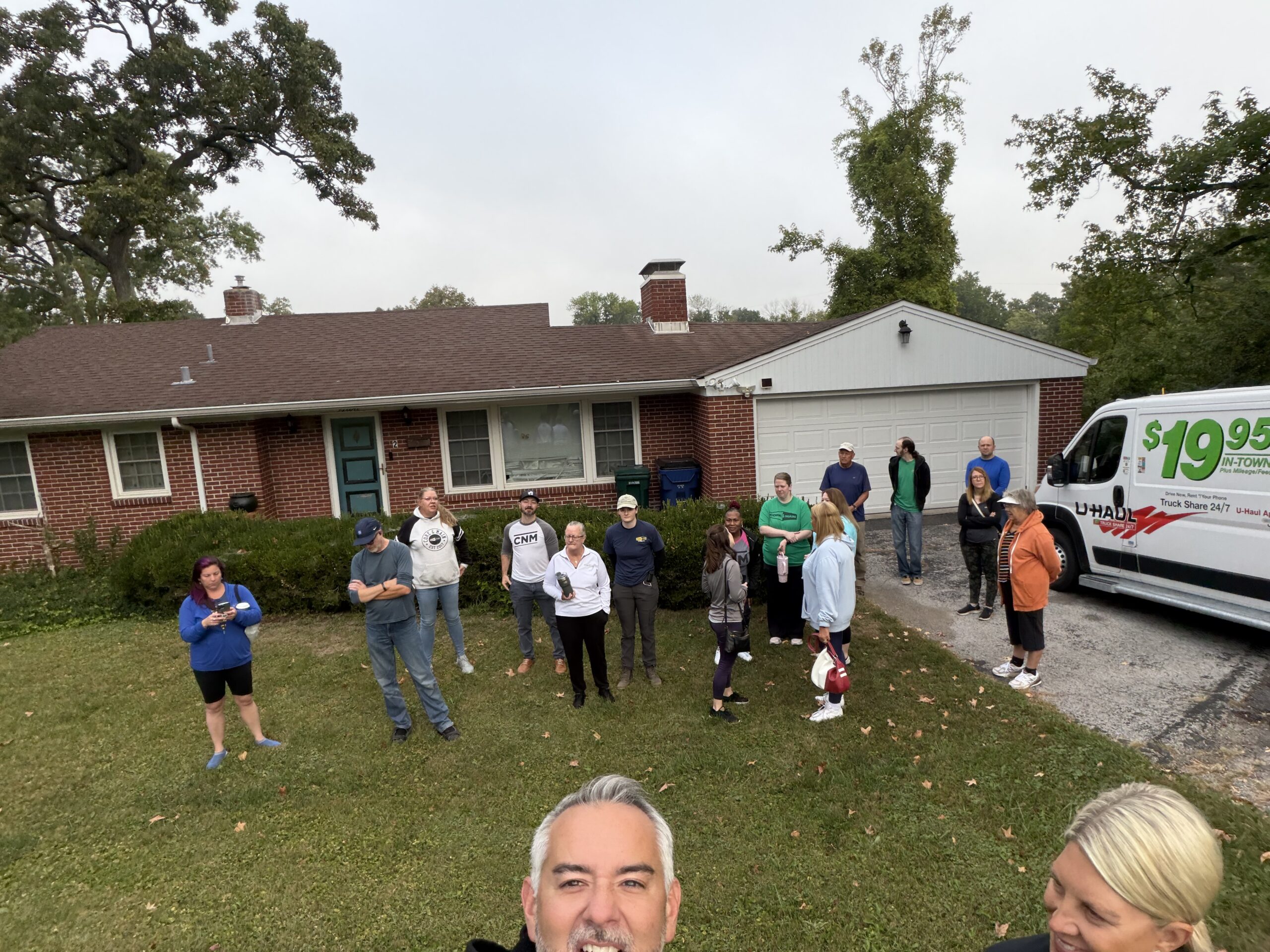
When we plan a Great Day, there’s no slow build. There’s a family, a set date, a house that needs attention, and a group of volunteers showing up ready to help. It’s real, it’s immediate, and it matters, and that combination has a way of pulling everything into focus. Instead of being pulled in ten different directions, I’m locked in on one thing, which is what needs to happen to give that family a great day. And spoiler alert… those days are never perfectly laid out. They’re messy in the best kind of way, with tasks shifting, timelines stretching, and issues popping up that we didn’t catch during the initial walkthrough.
What I’ve come to realize is that what most people would call chaos is actually where I do my best work. A Great Day has a lot going on at once. There are volunteers moving in different directions, tasks changing in real time, and things coming up that force you to adjust on the fly. Years ago, I probably would have thought that kind of environment would be a problem for me, but it’s the opposite. That’s where everything starts to click. I’m able to see what’s happening across the property, shift people where they’re needed, and keep things moving without getting stuck on what the original plan was supposed to be. It’s not random, though. There’s structure underneath all of it, and that’s what makes it work. From the outside it may look like organized chaos, but for me it feels like clarity.
There’s also an energy to these days that’s hard to explain unless you’ve been part of one. Volunteers aren’t just there to check a box, they feel something. They connect with the mission and buy into what we’re doing, and a lot of that comes from how we show up. I’ve always had a certain intensity in how I communicate and lead, and for a long time I wasn’t sure how that came across. Now I see it as one of the reasons people lean in and want to be part of this. It’s real, it’s honest, and people respond to that in a way that’s hard to manufacture.
There’s one part of my routine that most people don’t know about, and it’s become a constant before every Great Day. On the drive to the house, I play the same five songs, in the same order, every single time. I don’t skip them, I don’t shuffle them, and I don’t change the list. Weird, right?
But somewhere in that sequence, something shifts for me. By the time I pull up, I’m fully locked in and focused on that family, that house, and what we need to get done. I also don’t medicate on volunteer days, which probably sounds backwards. You would think those would be the days I’d want everything dialed in as much as possible, but I’ve learned that on these days I actually need access to all of it, the energy, the urgency, and the ability to move quickly and adjust in real time. That’s when I operate at my best.
If you ask some of my teammates, they’ll tell you they can definitely tell on those days. There have been more than a few times we’re in Home Depot talking through a plan, and right in the middle of the conversation I just veer off down an aisle because something caught my eye. No warning, no explanation, just gone. At this point, they’ve learned to just follow me. It’s part of it, and honestly, it usually works out.
At the same time, I’ve learned that being able to step out of it is just as important as stepping into it. When the day is over and I walk away from the property, I leave it there. The emotional weight, the intensity, everything that came with that day stays behind, not because it didn’t matter, but because it did. We showed up, we did the work, and we gave that family what we could in that moment. Then it’s time to move forward, because there’s always another family, another need, and another day to plan. That rhythm of fully stepping in and then fully stepping out has been one of the most important things for me. It keeps me present when it matters and steady for what comes next.
Another thing I’ve come to appreciate is how my mind connects ideas. The December 5th Fund was never meant to be just one program. The Great Day Program, the Helping Hands Support Plan, the corporate volunteer days, and the things we’re continuing to build all connect and support each other. That kind of thinking didn’t come from sitting down with a perfect plan. It came from recognizing patterns, seeing opportunities, and being willing to try things in real time. We’ve tested a lot over the years. Some things worked right away, some didn’t, but we kept moving. That willingness to take action, even when everything isn’t fully figured out, has helped us grow in ways I don’t think would have happened otherwise.
At the same time, I’ve learned that energy alone isn’t enough, structure matters. We’ve built systems around how we communicate with volunteers, how we organize tasks, and how we prepare for each Great Day, and that structure doesn’t take away from the heart of what we do. It protects it. It allows us to focus on the family when the day comes instead of scrambling behind the scenes.
If you would have asked me years ago how ADHD would play into my life, I don’t think I would have connected it to any of this. Now I see it differently. It’s part of how I lead, part of how I think, and part of why The December 5th Fund works the way it does. It’s not something I’ve had to work around, it’s something I’ve learned to work with.
And in a mission built around showing up for families when they need it most, it turns out the way my brain works isn’t something to work around. It’s exactly what this work, and every Great Day, requires.